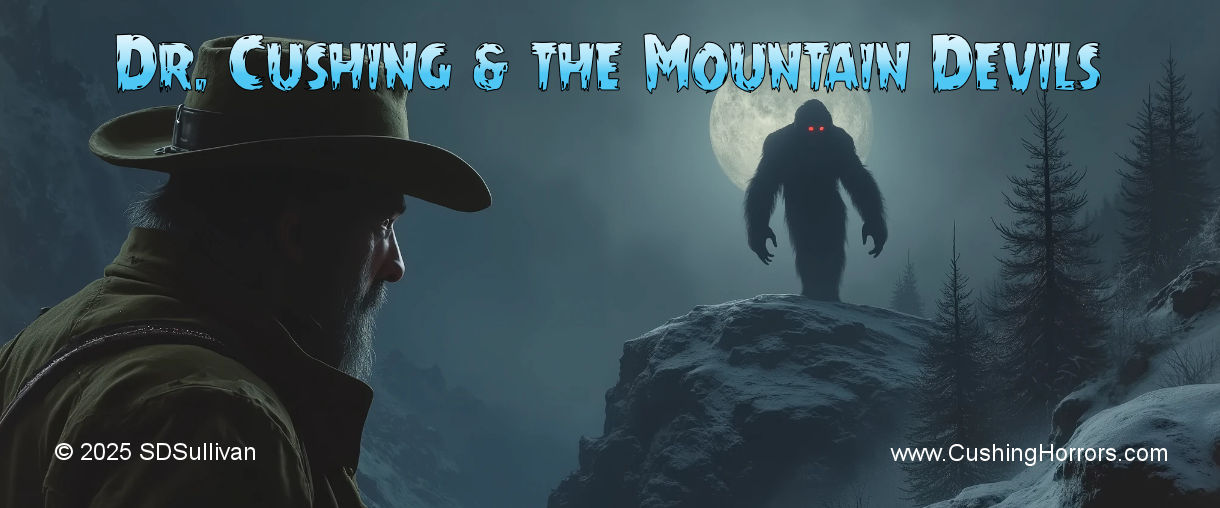

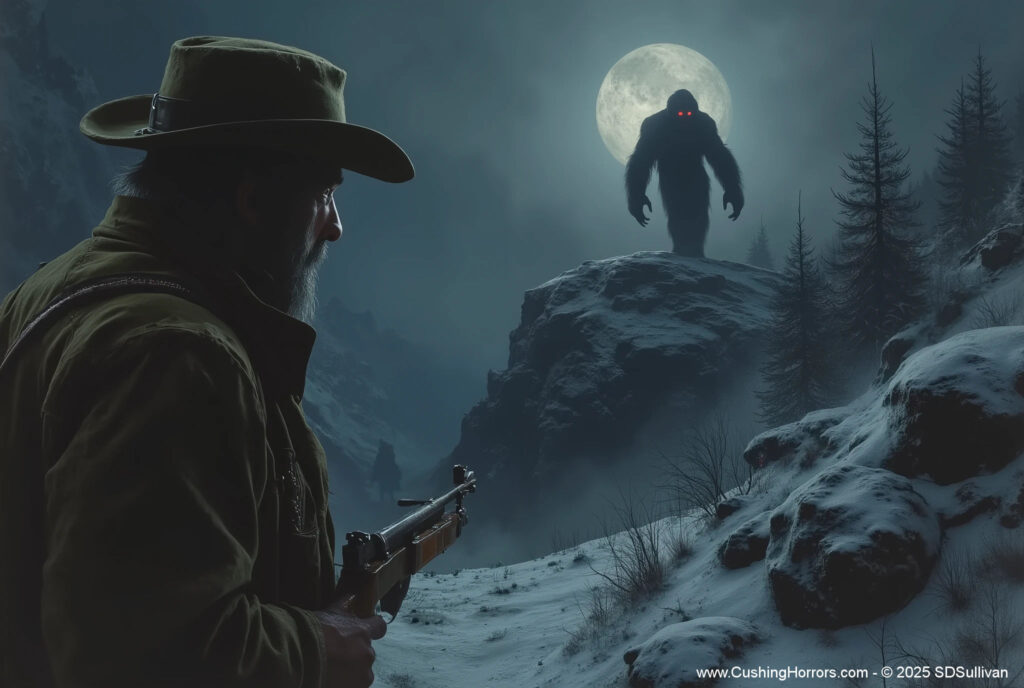
“Dr. Cushing & the Mountain Devils”
A Dr. Cushing’s Chamber of Horrors Prequel
by Stephen D. Sullivan
1.
The Mid Nineteen Twenties – Near Mount St. Helens, Washington State, U.S.A.
“Watch your step there, Doc! It’s a long way down.”
Jonathan “Jock” Tyler’s deep, barking laugh echoed down the rocky mountainside. The trail guide’s golden incisor glinted in the afternoon sunlight as he grinned at his middle-aged customer, following behind.
The warning wasn’t much of a joke, though Tyler seemed to find it highly amusing. Only a fool could have missed the precipitous drop to the left of the narrow, scree-covered path. The boulders and scrub pines the two men had to navigate around made this section of their hike even more precarious.
Dr. Leigh Cushing nodded in acknowledgement of the hazard, but he wondered: Does he really think I’m fool enough to walk off the edge of a cliff?
Perhaps it was just the American’s rough-hewn nature, but there was something about the mountaineer’s smile—something more than the gold tooth—that made the English explorer’s nerves jangle.
Cushing remembered a similar feeling he’d had near a dig in Egypt. Walking back to camp by himself one evening, he’d spotted a pair of hyenas eyeing him hungrily from atop a nearby ridge. The trick then had been to appear robust and healthy—not like prey. Perhaps that was the trick here, too.
He steadied his nerves, readjusted the heavy rucksack on his back, and took a deep breath of the chilly mid-December air. The stunning Cascade Range landscape smelled of fir trees and eroding pumice, good clean outdoor scents.
“Don’t worry, Mr. Tyler,” Cushing said, his words drifting away in tiny white clouds. “I’ve trod more treacherous slopes than this—and icier ones, too—many a time in Scandinavia and other remote spots.”
“I’m sure you have, Doc,” Tyler replied. “But I’ve hiked this mountain for years, and I can tell you, she is one treacherous bitch. I don’t want you losing any of the gear I’ve loaned you, though I’m sure you’re used to much more expensive stuff.” Another patronizing laugh. “Besides, you’re supposed call me ‘Jock,’ remember? We’re friends, ain’t we, Doc?”
Tyler paused and adjusted his pack as well, drawing himself up to his full height. His muscular frame outweighed Cushing by several stone, at least, though he didn’t stand quite as tall.
“Of course… Jock. The equipment you’ve supplied is fine, more than adequate for our needs.”
Cushing came to a complete stop and gave his borrowed kit a quick pat-down check. The rope, pitons and other climbing tools, and the 30-30 Winchester rifle were all in serviceable condition, if not the tip-top shape he would have preferred. But then, Dr. Cushing hadn’t expected to be mountain climbing during this family trip to the Americas. At least his own rucksack and the supplies he acquired in town before leaving on this daytrip were of the finest quality.
But could the same be said of his mountain guide?
Cushing didn’t feel sure. He wished he’d had time to research Jock Tyler’s reputation, but visiting Ape Canyon had been a last-minute addition to his itinerary. He’d never even heard of the spot—or its sensational history—before attending Laird Bennet’s symposium in San Francisco.
Am I a fool to trust this man?
To the west, Mount St. Helens loomed ominously. Though late autumn had been dry so far, snow already frosted the volcano’s summit, the primeval cone’s sides, and parts of the wooded landscape ahead. The mountain had lain dormant for years, but who could say when it might awaken? Not anytime soon, Cushing hoped.
“Keep moving,” Tyler called. He’d tromped a short distance ahead once more. “We don’t want to get stuck out here at night. That’s when the Mountain Devils come out.”
“So you’ve said, Jock.” Cushing hurried his steps to catch up. “Though seeing such a specimen in the flesh would be a triumph for my research.”
“Then you better hope those hairy bastards don’t see you first. We don’t call this place Ape Canyon for nothing. Those brutes are territorial, and they can rip a man limb-from-limb.”
“The newspaper reports I saw said all the miners in the famous incident came back alive.”
“Sure, Doc. But some folks vanish in these parts without a trace.” Again, the gold-toothed smile that made Cushing nervous. “That’s why we brought guns.”
“A sensible precaution in any untamed wilderness.”
“We ain’t looking for no fights, though. You’re paying me to see the cabin where the attack happened—nothing more.”
“You claimed you’d seen footprints, Jock—gigantic footprints.”
The beefy wilderness guide shrugged. “Maybe you’ll find some kind of evidence like that, and maybe you won’t. That’s the luck of the draw. I’m not making any big promises.”
“But you said…”
“Look, Doc, if I gotta fight apes or carry your carcass out of here ’cause you got into a scrap with some critter, that’s gonna cost you extra.” Once more, the grin.
Cushing suppressed a shiver. “I assure you; I’ve no desire to brawl with the wildlife. A footprint or a scrap of hair from one of these apes—if they exist—will be more than sufficient.”
“Okay, then. We go where we go, and you see what’s there. Footprints and scat are free.” Tyler laughed. “All you gotta do is find them. First, though, we get to that cabin.”
“Is it far?”
“Nah. See there up ahead?” He pointed toward a huge defile in the rock and pines, looking like an ancient scar across the landscape. “That’s Ape Canyon. Used to be called Goat Gorge before those gold miners got scared off their claim.”
“Impressive.”
And dangerous looking, with steep sides of sharp basalt, crumbling pumice, and ash. A fall into that rift could easily prove fatal. Local legend insisted that one of the miners had shot an attacking ape, which tumbled into the gulch.
Cushing wondered if anyone had bothered searching for the corpse.
“We gotta keep moving to get to the cabin and back down before nightfall. Remember, you’re only paying me for one day, Doc.”
“Yes, of course. Lead on, Jock. I can sightsee on the way back, if we have time.”
The trail they were following veered deeper into the forest of bracken and white pine, and the hiking became more difficult, though less dangerous.
“Not far now,” Tyler said. “If you look real hard, you can kind of see the roof downhill through the trees.”
Cushing strained his eyes but saw nothing save patches of bright snow among the dark firs and scrub evergreens.
Tyler suddenly stopped short and pointed uphill. “Hey! Look!”
Cushing turned to where his guide indicated. On a ridgeline ahead, obscured by the forest, he could just make out a dark shape moving through the trees. The animal was bulky, and thick black and brown fur covered its massive hide. From this distance, it resembled a huge ape—possibly—but it walked upright… like a man.
“Astounding!” Cushing gasped.
As he spoke, a metallic sound clattered nearby. He turned to find Tyler taking aim at the beast with his own 30-30 Winchester.
“No, you fool!” Cushing cried—too late.
BLAM!
The report from the gun shattered the stillness of the cold late-autumn air and reverberated down the mountainside.
Tyler cursed, re-cocked the gun, and aimed again.
But as the guide shot, Cushing lunged, pushing his arm aside.
BLAM!
If the second bullet hit anything, Cushing heard no ricochet. He had no idea if the first shot had struck its target. Before Tyler could reload, the creature vanished into the pines.
“What in hell?!” the guide raged, staring daggers at the older man. “You a fan of bears all of a sudden?! You gotta run those varmints off before they get too close.”
“That was no bear. It walked upright.”
Tyler sneered. “Bears can walk on two legs, Doc, just like you and me, if they’re of a mind to. I thought you’d been in the woods before.”
“I have, and I’ve seen many bears, but this wasn’t one. It was one of the things I’m looking for—one of the so-called Mountain Devils!”
The trail guide’s eyes narrowed. “Bullfeathers. You’re imagining things, Doc.”
“I know what I saw. We have to check—see if you hit it, see if there’s some trace.”
Tyler seemed nervous. “Well… You’re paying the bills. I guess taking a look can’t hurt. Maybe. Better get your gun ready, just in case. A bear’ll be long gone by now. But if you’re right, that Mountain Devil ain’t gonna take kindly to me shooting in its direction—whether I hit it or not.”
“Agreed,” Cushing said. His body trembled and he felt hot, the excitement of the chase coursing through him like electricity. This sort of discovery—or potential discovery—was what he lived for. He felt certain that he’d seen an ape-like humanoid, not just a bear standing on its hind legs.
Now if only he could find some evidence to prove it…!
They moved quickly, following the trail to the spot closest to where they’d seen the animal and then cutting into the trees. The pines grew taller the further they went from the precipitous mountainside, and though much of the seasonal undergrowth had died away, scrub greenery still made the trek slower that Cushing would have liked.
“See anything?” Tyler asked. They’d separated by several yards, to search more ground, while still remaining close enough to assist if a bear—or an ape—suddenly appeared.
Cushing shook his head, disappointment dragging his shoulders earthward. “You’re certain this is where we saw… whatever it was?”
“Pretty sure. We should get going. Not a lot of time to waste if we want to get to the cabin and then back to my truck before dark.” Tyler gave a hog-like snort. “We spend the night out here, you owe me for another day.”
“Yes. You’re right, I… Hello! What’s this?”
Cushing’s pulse quickened again as his eyes traced an outline in a patch of snow.
“What?” Tyler asked.
“It’s a footprint—or part of one anyway—in the snow.”
Tyler trudged in his direction. “Probably just spoor from that bear I saw.”
“I don’t think it’s a bear, Jock…” Despite being a partial print missing any toes or heel, the track measured nearly a foot long.
Cushing opened his rucksack and fished out his camera—a German-made Leica A with the innovative new 35mm film. He’d stretched his budget buying this top-of-the-line portable camera for this trip to the Americas, but would there be enough light to get a good photo?
Tyler stared down at the print Dr. Cushing was attempting to photograph. “That’s pretty big, all right. Could be that bear stepping into its own track.”
“If it was in the dirt rather than snow, I could make a casting…” Cushing mused quietly. He snapped off a few shots, trying to get good angles, despite the mountain forest’s dappled lighting.
Seeming bored with the photographic process, Tyler continued scanning the local terrain “What about this one over here?”
Cushing’s heart pounded as he hurried to where the mountain guide stood.
Tyler stared at the ground, appearing puzzled. In front of him in the rocky earth lay a print, perhaps a foot and a half long. “Might still be a bear. Probably.”
“I don’t think so, Jock. The shape looks almost human—though much larger, of course. Look at the toes and how they line up… And no sign of claws in the imprint, either.”
“Bear tracks don’t always show claws,” Tyler observed, pursing his lips.
Cushing wriggled out of the straps and opened his rucksack. “This is just the kind of thing I need,” he said. “It’s perfect for taking a cast.”
“Taking a what now?”
“A plaster cast of the spoor.” Cushing worked quickly, first setting up cardboard strips, which he’d brought for just such an eventuality, around the track. Then he quickly mixed a solution of plaster of Paris with water from an extra canteen in a tin pan.
Tyler frowned and surveyed the surrounding landscape skeptically. “How long is this gonna take?”
“I can’t be sure.” Cushing poured the plaster into the cardboard-bounded mould. “Perhaps thirty minutes to an hour. It’s difficult to tell how long the mixture will take to harden with this soil, in this temperature, and at this altitude. It could be less time; it could be more.”
“Maybe we should hike to the cabin and come back for it later.”
“Absolutely not! This is the most important piece of evidence we can have, aside from fur, a photograph, or an actual specimen. What if something should happen to the cast while we’re gone? What if some animal ambles by, or the creature itself returns, and destroys the mould, whether by accident or design? No, Jock. We need to guard this casting until it’s dry enough to transport.”
Tyler grumbled. “This is gonna foul up our timetable.”
“If it does, it does. I haven’t come all this way just to return home empty handed.”
The guide tromped the area as they waited, several times pointing out other prints to Cushing, though none were as complete as the one the doctor had already cast. As time passed, Tyler grew restless, stomping his feet and slapping his arms to warm them. The cloud of his breath hovered over his head like a halo. He kept peering anxiously at the western horizon, in the direction of their trail, and toward, Cushing assumed, the miners’ as-yet-unseen cabin.
Several times Tyler stopped his pacing to listen, a few times to distant whistles, a few times seemingly to things Cushing couldn’t hear.
“Are those birds?” Cushing asked.
“Yeah. Birds.”
“What kind of birds?”
Tyler shrugged. “Not the kind you can eat. If I can’t eat ’em, I don’t give a damn.”
Cushing thought this a strange attitude for an outdoorsman and guide. “What do you do when you’re not giving mountain tours, Jock?”
The burly man stopped pacing. “Construction—building houses and stuff. Not much call for that this time of year. So, I do things like this to make ends meet.”
“And hunting?” Cushing eyed the rifle clenched in Tyler’s big hands.
“Yeah. Sometimes I shoot a deer or elk and sell the meat. Or I take down a beaver or a bear for the fur. Those pay pretty well.”
“Not as well as this guided tour, I’ll wager.”
“Yeah, but this ain’t easy money, either. How much longer?”
Cushing smiled. “I think this should be solid enough to transport now.” He carefully prised the plaster out of the surrounding earth and gave it a quick once over. Satisfied with the quality, he wrapped the specimen in several soft cloths he’d packed along for that purpose.
Tyler grunted his approval. “We should get to the cabin. Won’t make it back down to the trailhead before nightfall, now. Staying in that heap won’t be comfortable, but it’s better than sleeping in the open. I hope the extra dough for this overnight is in your budget, Doc.”
“I can cover the cost. And this cast has already made my trip worthwhile.” He smiled with satisfaction, but secretly, Cushing still wished for more: a glimpse—or perhaps even a photo—of the creature that had made the print.
Just then, an eerie howl echoed across the wooded mountainside. Tyler startled.
“Wolf or coyote, do you think?” Cushing asked. He finished securely packing the cast into his rucksack.
“Not many coyotes in these parts—or wolves, ’cause of the bounty on them.”
“What, then?”
“Dunno. Let’s get moving—before it really gets dark.”
Indeed, by the time they reached their destination, the shadow of Mount St. Helens had already swallowed much of the daylight.
To call the structure they found a cabin was a stretch in Cushing’s mind. Certainly, it wasn’t the kind of rustic log construction the Englishman had seen in illustrations about American Old West pioneers or the home of U.S. President Lincoln.
The building reminded Cushing more of drawings he’d seen of American Indian longhouses, but erected along the lines of an A-frame. The front and back were squat and almost triangular, built of thick, rough-cut logs. Occasional irregular gaps in the chinking served as slender windows—or perhaps gun ports. A hewn-log door stood wedged in a narrow doorway on the front end.
The roof, comprised of sections of tree bark or long wooden shakes for shingles, sloped down in a gentle bulging curve almost to the ground, like the roofs of some old thatch houses in England. Cushing estimated that the main beam of the building stood at least ten feet tall, with the outward bow of the roof making it comfortable for a man to stand almost to the edge where the eves met the short outer walls. The whole edifice was twice as wide as it was tall and perhaps three times as deep, a decent space for the company of five men who had once inhabited it.
Two years of abandonment had done the structure no favors, though. Much of the chinking between the big logs had fallen out, and the roof sported numerous holes, though a battered-looking stone chimney stood near one end.
Tyler shook his head and scoffed. “This place’ll make you long for the shabbiest dive in Kelso before the night’s through.”
In fact, Cushing was trying very hard not to think about his tidy little room in the nearby small town, or about his twin daughters—Opal and Topaz—who by now should be comfortably ensconced with their cousins on a beautiful Canadian lakeshore.
Concentrate on what Bennet and the rest will say when you show them the ape cast…
“I’m sure it will suffice,” Cushing said. “Any port in a pinch, as they say.”
A new howl keened across the mountainside as they hiked down the steep slope to their makeshift accommodation. Another eerie whistle from closer at hand followed.
“Shut up, ya damn gooney birds!” Tyler shouted. “We better get inside, Doc. Hope we can build a fire; it’ll get awful cold if we can’t. And I hope it don’t snow.”
Those both sounded like sensible hopes to Cushing.
The flinders of what might once have been furnishings filled the cabin’s interior. Cushing spied pieces of a former table, chairs, and bunks. The room smelled of moss, mold, and rotting things, as well as less savory waste, but Cushing had endured worse during his travels. Thick dust coated everything, and he and Tyler had to chase away several clans of mice by kicking their tangled nests outside. Neither man believed they’d evicted all the rodents, but hopefully they’d gotten enough not to be bothered at night. They also had to prop up and brace the old hewn-log door, which had lost its hinges, to keep out the wind.
Fortunately, the chimney remained intact, and after checking the flue and clearing the base of rocks and debris, the two men had no trouble making a fire. They used the remains of the furniture as fuel, after Cushing determined that none of the pieces possessed any historical value.
“If we make this blaze as big as we can,” Tyler said, “it’ll heat the stones and keep us warm all night. Then we won’t have to hunt for more wood outside later, and we can get some rest.”
Cushing nodded. “Agreed. The forecast in town suggested a warming trend overnight, too, which should help.”
So, they piled up the wood and built a roaring conflagration.
Just when the dilapidated cabin started to feel cozy, a shrill whistle pierced the twilight—this time, clearly no bird.
Perhaps a man? Another hunter or explorer could have seen the smoke from our fire.
Before Cushing could relay the thought, Tyler scampered to the front of the cabin and one of the window-like slits in the wall. The guide squinted into the deepening twilight and clutched his Winchester tight in one big hand. His gold tooth glistened in the semi-darkness.
“They’re here, Doc!” he whispered urgently. “The Mountain Devils!”
As a second screeching whistle—different than the first—sounded, Cushing scrambled to the front of the cabin, pausing only long enough to grab his borrowed rifle.
He pressed his eye to a chink in the log wall and peered outside.
A hairy figure, silhouetted against the indigo sky, darted across Cushing’s line of sight before vanishing into the dark shadows beneath the pines.
Cushing gasped. His heart pounded.
Eureka!
“Get your gun ready!” Tyler whispered. “I think they’re sporting for a fight!”
“No!” Cushing replied. “We have to study them. I’ll fetch my camera…”
He turned to do so, but Tyler grabbed him roughly by the arm.
“You wanna get us both killed?” the guide asked, his voice practically a growl. “This ain’t no time for vacation photos. This is the time for a man to defend himself!”
A hot flush of embarrassment ran through Cushing. “Yes. Of course.”
Snapping pictures! He couldn’t believe he’d entertained such a reckless notion given their peril. He and Tyler were alone in the wilderness, at least six miles from the nearest ranger station, with neither phone nor any other means to summon assistance. Heaven only knew what these hairy apes, or whatever they were, might do. Protecting their own lives had to be their first concern.
That footprint cast will do no good if I never get to show it to anyone.
Another shaggy figure, or perhaps the same one, dashed past the front of the cabin, going in the opposite direction.
Tyler brought the gun up to his makeshift viewport.
“We mustn’t fire until we know they’re hostile,” Cushing warned, unable to stop his voice trembling.
Thwak!
Something hit the side of the cabin near the door. A rock?
THWOK!
Something bigger—a larger stone?—on the roof.
Cushing remembered that the Mountain Devils allegedly drove the miners from this very cabin with a hail of boulders lasting all night long.
“That hostile enough for you, Doc!” Tyler took aim as another figure rushed past.
In Cushing’s mind, scientific curiosity waged war against primal fear.
What had he been thinking trekking Mount St. Helens on the verge of winter? How had he gotten himself into this fix?!
2.
Kelso, Washington State – Yesterday
“Howdy, stranger,” said the deep-voiced big man ambling toward the table where Dr. Cushing sat alone in the rustic local inn’s tavern. Another man, just as large, trailed one step behind. “We heard you’re askin’ about Ape Canyon.”
Cushing tried to size up the men through the smoky atmosphere in what passed for a public house in the United States. The dimly lit corner he’d chosen to sit in didn’t help, nor did the not-very-good sherry he’d been drinking. (Though finding any sherry in a venue clearly dedicated to beer and hard liquor had been something of a miracle.)
The two newcomers towered over Cushing, who measured nearly six feet tall when standing, with frames close to twice the width of his shoulders. Thick dark beards adorned both their craggy faces. Their clothes didn’t entirely match, but both wore heavy winter jackets, unbuttoned, with buffalo plaid shirts and suspenders beneath. Well-worn denim pants and heavy boots adorned their massive legs. Fur-lined trapper hats with the earflaps hanging loosely over their ears sat atop their shaggy heads. The men’s narrow eyes gleamed in the saloon’s flickering electric lights.
Ruffians, Cushing’s mind quickly warned. But really, the pair didn’t look much different from any of the tavern’s patrons—or indeed, many of the people Cushing had seen in this isolated American town, which the citizens quaintly called a “city.”
Remembering his manners, and fearing that he’d tarried too long in replying, Cushing gestured to the far side of the table. “Gentlemen, please… Take a seat.”
During his travels, he’d grown accustomed to many diverse cultures, though the differences between England and the States still surprised him. “Two countries separated by a common language,” (or something similar) someone had once said. Was it Wilde? Shaw? It didn’t matter. What mattered was adapting to the local culture and achieving his goals on this trip. “Can I get you gentlemen something?”
Both men scraped chairs across the inn’s wooden floor and sat. The floorboards trembled beneath their bulk.
“Beer,” grumbled the man with blue eyes who’d spoken earlier.
“Yeah, that’s good,” agreed the brown-eyed one. The two looked similar in more than attire and facial hair. Siblings, perhaps?
Cushing signaled for the barmaid. “Two beers for these gentlemen, please.” The woman, an attractive blonde, also clad in red-and-black plaid and denims, nodded and went to fetch the drinks. “I am Dr. Leigh Cushing, of Fisher Street, London, England. And you are…?”
“I’m Bob… Bobby Jenson,” said the blue-eyed one. “And this is my brother Jim. We’re from here, Kelso.”
The brown-eyed one bobbed his head in assent. “Also known as ‘No Place Special, U.S.A.’ So, Doc, you interested in Ape Canyon or what?” The waitress brought the frothy brews, and both siblings took a gulp.
Cushing sipped his sherry. “Yes. I am very much interested in this so-called Ape Canyon and its legend. However, to this point, you are the first people I’ve met who seem interested in discussing it.”
“Folks’re sick of all that bull,” Jim Jenson mumbled in reply.
“My brother’s right. All that bunk happened two years ago. Those newspaper guys wore out their welcome pretty damn quick. Folks just want things to get back to normal—you know?”
“Perfectly understandable. But I take it you two feel differently?”
“Nah,” Jim said. “We’re sick of it, too.”
Bobby elbowed him hard enough that, if he’d done the same to Cushing, he might have cracked a rib. Jim merely grunted and took a long drink.
“What my brother means is that we don’t much care one way or another, but if you’re paying the freight, we might spill a thing or two.” He finished his beer and signaled for another round for the siblings.
The barmaid looked at Cushing, who nodded his assent. “What I want to know,” he said, “is how much of this legend is true. Were these miners and their camp truly besieged by apes? Did they abandon their cabin forever because of it? And if so, where did this encounter take place?”
Jim scoffed. “That’s what Marion Smith, Fred Beck, and their buddies said. But I think their mine played out, and they didn’t want to admit it. So, they made up a hairy excuse not to go back.”
“You’ve been to the mine?”
Bobby and Jim exchanged wary glances.
“A guy’s gotta be a little crazy to go out that far,” Jim said.
“Workin’ a timber crew is dangerous, but at least the pay is good,” Bobby added. “Spendin’ weeks on the mountainside with black bears, grizzlies, and God only knows what else… Like my brother said, that’s nuts.”
“Would you take me there?” Cushing asked, anticipation of a future discovery building. He took a larger sip of sherry and checked his pocket watch to tamp down his eagerness. Quarter to six, with the mid-December sun already set, of course.
Another exchanged look between the brothers, followed by long draws on their new drinks.
“Nice watch you got there, Doc,” Jim finally said. He followed the comment with a belch.
“Thank you,” Cushing replied, snapping the golden timepiece shut. “It’s a family heirloom.”
“What my brother is tryin’ to say,” Bobby elaborated, “is that kind of adventure—the kind you’re talkin’ about—costs money. Though it looks to us like you might have it.”
“I’m well enough supplied.”
In truth, the Cushing family’s trip to the Americas had been financed by a traveling display of occult artifacts from Dr. Cushing’s collection. The exhibitions had begun in New York and finished in San Francisco. There, he’d participated in “A Symposium on Supernatural Myth and Legend in the Modern World” put together by the Reverend Dr. Lawrie Bennet, a wealthy Laird Cushing had befriended at university. Bennet had underwritten the whole trip.
If not for his friend-and-occasional-rival’s beneficence, such a voyage would have been far beyond Cushing’s financial reach. Though he had squirreled away a few pounds for side trips like this and the visit he and his teenage daughters had taken to the infamous Winchester Mansion.
But he didn’t dare bring the twins out into this vast wilderness with him. Instead, he’d packed them onto a train to visit cousins in Canada. He’d join the family there for Christmas before he and the girls headed home.
“You can take me to the site of the incident, then?” Cushing ventured.
Again, those sibling glances.
“Nope,” said Jim. “We got better stuff to do.”
“What my brother means is that we got jobs. Workin’ timber is good and regular. No telling how long a hike like that might take.”
“And we ain’t expert mountaineers or nothin’. We ain’t even part-time pretend gold miners, like Smith and Beck and those jokers.” A mischievous glint played across Jim’s brown eyes, possibly at the mention of gold or the jibe he’d taken at the men originating the Ape Canyon story. “Lumberjackin’ and riverwork’s got me and Bobby too tuckered out for them kind of ‘fishing’ trips.” He bellowed a deep throaty laugh.
Cushing’s excitement deflated like a pierced balloon.
“But,” Bobby confided, “if you really wanna go to that canyon, we know a guy who might take you…”
3.
“Sure, I’ve seen footprints that might be those so-called apes. And yeah, I could take you there.” Jock Tyler spoke softly, cleaning his fingernails with a pocketknife. Dr. Cushing sat opposite him at a round timber-built table in the kitchen area of the guide’s small cabin near the outskirts of town. “I spent a lot of time hiking the shoulders of Mount St. Helens. But Ape Canyon… That ain’t a place for a man to go—not a smart man anyway—especially not some citified foreigner.”
Tyler’s domicile smelled of uncleaned dishes, dust, and the taxidermied animal heads—deer, elk, and even a black bear—mounted on the home’s full-log walls. As with many unconventional locales, Leigh Cushing was willing to put up with the inconveniences to achieve his aims.
“Don’t judge my durability by my accent or my attire, Mr. Tyler,” he replied. “I’ve been in plenty of tough scrapes during my day. I assure you that I’m equal to this venture.”
Tyler regarded him skeptically. “Then you’re lucky I’m between jobs at the moment, Doc. I can take you… For the right price.”
“I’m willing to pay any reasonable fee.”
“It’s a long haul, and my skills don’t come cheap.”
“As I’ve said…”
“Fifty bucks to take you there—one day, out and back—whether or not you find what you’re looking for. Up front.”
Cushing tried to do the maths in his head, but he was never very good when it came to system conversions, especially with money. Unfortunately, he knew that using a notebook to figure it out would damage his bargaining position, as well as being personally embarrassing.
Was the fee asked around ten pounds or merely five? Five would be about two weeks’ wages for many people; he and the twins were lucky if fees in his Chamber of Horrors cleared fifteen pounds a month. He’d only budgeted five pounds in expenses for each week of this trip, though he’d managed to save a bit back along the way.
He didn’t want this side expedition to break the bank, though his family’s return trains and ship were already paid for. No matter how he figured it, Tyler’s price seemed excessive, almost Wild West banditry.
But when would he get another chance like this—to see an actual legend in the making just a few scant years after it happened? And if he were to actually discover proof an unknown ape species in the Americas…! The very notion of such a breakthrough shot thrills through him.
“I assume your fee will include any outfitting needed in such an expedition. I can supply my own rucksack, scientific paraphernalia, and outdoor gear. But shall we need climbing supplies, firearms, or other equipment?”
Tyler sat silently for a few moments, as if considering, and then slowly nodded. “Yeah, I can drive us to the trailhead and loan you the rest of the stuff we’ll need for the day: a rifle, ropes and such. But if this trip ends up taking longer, or if we run into any trouble… Well then things are gonna get more expensive.”
“Perfectly understandable.” Cushing checked his pocket watch. “Shall you pick me up at my lodging at eight-thirty tomorrow morning? I’ll have your fee in hand then.”
“Sure.”
Tyler showed up closer to ten.
“Sorry. Took longer to get things arranged than I thought,” he explained.
Cushing tried not to let his exasperation show. “So long as it doesn’t increase the cost of our little outing.”
He climbed into Tyler’s vehicle, a rust-spotted Chevy truck, and handed over the fifty dollars, which the guide quickly pocketed. Cushing eyed the pickup’s dingy interior skeptically. “I trust this conveyance is up to the task.”
“The ‘Tonner’ will get us there in one piece, don’t you worry.”
Indeed, the rattletrap truck carried them safely to Gifford Pinchot National Forest, on the flanks of Mount St. Helens, despite a noisy and very bumpy ride. Firs and pines lined the tall ridges along their way, and the chilly air leaking around the truck’s windows smelled fresh and clean.
They parked at the trailhead next to a newer Ford Model TT pickup.
“Do we have rivals in our expedition, Mr. Tyler?” Cushing asked, indicating the other vehicle.
The mountain guide scoffed. “Other people hike here, too, Doc, even in December. We’ll be lucky if we see anybody on this slog—including your Mountain Devils.”
4.
The Miners’ Cabin – Now
BLAM!
The booming report from Tyler’s shot shook dust from the battered roof of the old miners’ cabin and fractured chips of mortar from the crack in the wall next to his gun barrel.
“What’re you waiting for, Doc?!” he shouted. “SHOOT!”
Cushing clutched his Winchester with trembling hands. “But… We don’t want to kill them. They might be unique specimens. They might—”
“They might kill us!” Tyler fired again. “We gotta at least scare them off!”
Cushing levered a shot into his rifle’s chamber, shoved the barrel through a gap in the wall, and pulled the trigger.
BLAM!
The shaggy silhouette of a Mountain Devil capered past, unharmed.
Cushing felt no need to tell Tyler that he’d missed deliberately. The guide had said that the point was to frighten these apes, hadn’t he?
They fired another round, and then another, and then a third. Each time, more shards of chinking fell from the cabin wall, and the tiny structure shook with the deafening reverberation.
Cushing’s ears ached, but so far as he saw—possibly because he was deliberately missing—no apes fell to their volleys. He couldn’t tell how many foes they were facing, as the creatures continually dashed in and out of the woods surrounding the cabin; at least two, he thought. Nor could he tell if their adversaries were truly apes, or something else entirely. The light just wasn’t good enough.
A rain of rocks, mostly small but some large enough to rattle the roof, constantly pelted the aging structure. Eerie howls and guttural growls filled the night air. Occasionally, when the brutes were out of view, their almost-human whistling echoed off the mountainside. Then another assault of stones would begin.
It seemed to Cushing as though he and Tyler were re-living the siege the miners had described. Clearly, that story was no legend.
“Cover us while I reload,” Tyler ordered.
But as the guide tried to withdraw his gun barrel into the cabin, a hairy mitt seized it and nearly yanked the weapon from his hands. Tyler pulled back hard and screamed: “Shoot it!”
Cushing swiveled instinctively and pulled the trigger.
BLAM!
Tyler fell onto his backside, his gun suddenly released. The Mountain Devil gave a roaring scream and lumbered back into the shadows.
If they attack the door, will our bracing hold? Cushing wondered.
He turned his rifle toward the hairy figure on the other side of the cabin entrance. He needed to shoot accurately now. With his and Tyler’s lives in jeopardy, this was no time for scientific compassion.
BLAM!
The target’s hide must have been exceedingly tough, because it tromped casually back into the sheltering trees, though it did stagger as it wheeled to retreat.
Another Mountain Devil appeared out of the pines opposite. Cushing took aim…
CLICK!
His blood ran cold.
“Reload, Doc! I’ll cover you.” Tyler reappeared on the firing line, shaking his head ruefully. “You didn’t pay me for anything like this!”
“No… No, I didn’t,” Cushing admitted. His fingers felt numb from the cold wind through the chinks, his ears rang, and the cabin air stank of gunpowder. He fumbled, half-blind in the dim light near the doorway, struggling to jam new cartridges into the weapon’s side gate.
Tyler aimed and fired. “This is gonna cost you—and not just for a second day. I’m talking pay for risking my life here… Double… No, triple what we agreed… and for the first day, too!”
He shot again. A Mountain Devil roared, a nearly human cry.
A chill ran through Cushing. His plans had gone unspeakably awry. He steadied his quaking arms, aimed, and fired.
BLAM!
“I… I can pay you extra, Jock,” he said, his stomach twisting with regret, “maybe two days’ worth. But that’s all. I-I’m afraid I can’t afford any more. I’ll pay you what I can if… when we get back to town.” He took aim and fired at another shadowy creature.
Every time he and Tyler shot, though, the beasts simply trudged back into the pines. The monsters’ resilience seemed impossible. Cushing considered himself a crack shot with either pistol or rifle. What were these brutes made of? Were they not flesh and blood at all?
The cold apprehension in Cushing’s gut spread through his whole body. He’d had experience with unnatural—even supernatural—creatures before. If that’s what he and Tyler faced here, what chance did they have of surviving?
“What are you talking about?” Tyler blurted angrily after his next shot. “You’re a doctor! You’re rich. You’ve got a gold watch and everything. I’ve seen it!”
Cushing fired again, though to him their defense felt increasingly futile. “I have doctorates in history, archaeology, and mythology—not medicine. And the watch is a family heirloom.”
Tyler stopped shooting and stared at him, agape, gold tooth all but invisible in the dark. “But you’re English… you’re in America. Just getting here had to cost a pretty penny.”
As the gunfire ceased, for a moment, only the patter of a few stones on the roof broke the stillness. Perhaps their foes were rallying for a final assault.
“I spoke at a symposium in San Francisco,” Cushing explained. “They financed the entire trip. I’ll barely have pocket change left after paying you. I can afford three days at the rate we agreed, though.” He aimed at a Mountain Devil lurking at the edge of the trees and fired. The creature ducked away.
“All this for a lousy hundred and fifty bucks…!” Tyler muttered through gritted teeth.
A wailing howl, much louder than before, pierced the night.
The rain of stones against the ramshackle cabin stopped.
“I’m sorry, Mr. Tyler,” Cushing said. “I know it’s sparse compensation for such an ordeal, but…!”
“You bet it is!” Tyler stared daggers at his customer.
Then the mountain guide rose, kicked out the brace they’d put on the hewn-log door, and rushed outside, gun blazing. “G’wan, ya bastards! Go home! Get out of here!”
BLAM! BLAM! BLAM!
Fear shot through Cushing. “Jock! NO!”
But surprisingly, both of the Mountain Devils Cushing could make out through the gloom vanished into the treeline.
Apparently seized by some madness, Tyler raced after them into the darkness. “This is all I got for you! This right here!”
BLAM! BLAM!
Another bone-rattling howl filled the cold night air, then another in a slightly different pitch, and then a third.
A scream echoed across the mountainside, a human scream, followed by a single rifle report. Then cries of agony and uncanny howls.
Cushing stood in the cabin doorway, rifle clutched tight, his body frozen with fear.
It sounded as though an entire town was being massacred.
Yet more heart-rending wails, more inhuman shrieks, more keening whistles…
The awful clamour swirled and built into one final, mountain-shaking howl…
And then… silence.
Dr. Cushing lurched back into the cabin and barred the door again.
He scrambled to the corner of the shabby room nearest the still-crackling fire and pressed his back against the wall. He aimed his Winchester at the doorway, waiting…
Watching…
Listening…
Terrified…
Eventually, the faint light of dawn crept through the cracks in the cabin’s chinking.
By then the fireplace lay cold, and a deep chill had settled into Cushing’s bones.
When the sunrise grew bright enough to see properly, he secured his rucksack, opened the door, and, leading with his gun barrel, stepped outside.
5.
Cushing saw no sign of man or beast near the cabin, save for many large footprints trampled atop each other in the dirt and patchy snow.
None of the spoor were clear enough to bother trying to cast or even photograph.
Taking a deep breath of the brisk morning air, Cushing got his bearings and then hiked back the way he and Tyler had come. Fortunately, the doctor had plenty of wilderness experience and a keen eye for detail. The temperature had, indeed, risen overnight, and vigorous movement soon chased the cold from his body.
Several times between the cabin and Ape Canyon, he spotted traces of blood and fur. He didn’t dare stop to take samples, though, and kept his rifle at the ready.
He never saw Jock Tyler’s body. Nor did he spot the remains of any of the apes they’d shot.
Even miles past the canyon, Cushing remained on his guard until the end of the trail came within sight.
There he found his guide’s ‘Tonner’ Chevy still parked at the trailhead, with no signs that its owner had returned. The Ford Model TT remained as well.
Could whoever owns that truck have been attacked as Tyler and I were? Cushing mused.
He felt helpless, but he needed to do something. Perhaps there was still some hope. Perhaps even now, Tyler lay injured in the woods… somewhere.
A sip from his chilly canteen cleared Cushing’s head enough to recall the location of a ranger station that he’d seen on a map two nights previous. The hike to that outpost wouldn’t be too far compared with the distance he’d already come.
Cushing reached that rustic haven of civilization just as the afternoon waned.
His strength failing, he staggered toward the well-maintained cabin and stumbled inside.
“A man… Tyler… Lost on the mountain… attacked by apes…” he babbled to the startled attendant upon entering.
The man had Cushing sit down and relate his story in detail, handing the Englishman hot coffee to help calm his nerves. After checking several of the account’s details twice, the ranger picked up the station’s two-way-radio and quickly summoned a search party.
Soon, the woodland filled with the roar of the assembling trucks and search vehicles, and the whinnying of horses as the posse arrived and organized the rescue operation.
“Don’t you worry,” the ranger assured Cushing. “We’ll find your friend.”
“More of an acquaintance, really,” Cushing admitted. “But please do. I hope he’s all right.” In his heart, though, he doubted he’d ever see Tyler again—alive.
“I hope so, too,” said the ranger. “You just rest here. We’ll let you know when we find him.” He indicated a cot in a corner near the cabin’s wood-fired stove.
Cushing dropped heavily onto the canvas-draped frame and sat, mind full of fog. Only as the searchers departed did he remember that he hadn’t eaten for nearly a day. And God only knew how long it had been since he’d slept.
He opened his rucksack long enough to devour a few handfuls of jerky, hard biscuits, and dried apricots. Then he took a long drink of coffee, collapsed onto the cot, and fell mercifully asleep.
6.
Bright yellow light beamed through the cabin’s small windows. The sun had crept high in the clear, blue sky—almost to noon—when Cushing awoke the next day. He ached everywhere but felt sincerely glad to be alive, safe, and warm.
Someone must have kept the stove burning overnight, but he had no memory of that, nor of anyone else being in the cabin at all.
His coffee had gone cold. So he heated it on the stovetop and then repeated his meal of the previous evening. He could hardly wait to return to his lodging in Kelso and order some hot food. He hoped the small inn hadn’t given his chambers to anyone else while he was gone; most of his luggage remained there.
Surely, they wouldn’t have sold my belongings because I’m in arrears on my lodging payment for one day.
Americans were a strange bunch, though. He’d learned that much. No telling what the local custom might be on confiscating luggage for non-payment. Perhaps, if he was lucky, the ranger had explained his situation to the inn’s proprietor.
Only then did Dr. Cushing recall Tyler—and the money he’d promised him.
“If worse comes to worst, I’ll pay the man’s heirs what I owe him,” he muttered, surprised at how much gravel his voice contained. The trials of the last forty-eight hours had certainly taken their toll on him, body and soul.
He could hardly wait to leave the mountain, Kelso, and all of the United States behind and join his daughters and his cousins on the shores of Okanagan Lake in British Columbia. Christmas in Canada would feel like paradise compared to what he’d been through.
All this… and for what…?
Then he remembered…
“The footprint!”
Filled with excitement like a boy on Christmas morning, Cushing pulled the heavy bundle from his rucksack and carefully unwrapped it.
He grinned, the thrill of triumph bringing clarity to his weary brain.
The cast looked perfect, sixteen inches at least in length, with five distinct toes. There were, indeed, giants in the world, and he’d discovered proof of them!
Cautiously, on unsteady legs, he walked outside to get a better look at his prize in the full sunlight.
As he stepped onto the cabin’s porch, a newer red pickup pulled up. and the ranger he’d met yesterday climbed out.
“Did you find him?” Cushing asked, apprehension mixing uneasily with his newfound exhilaration.
“Yeah. We found him. Dead at the bottom of Ape Canyon.”
A cold fist clenched in Cushing’s chest, all delight at his discovery vanishing.
“Found two other men with him, too—also dead,” the ranger continued.
Cushing noticed the official had something tucked under his arm. He held out the large wooden object, which had snowshoe-like straps on it.
The ranger turned the thing over, displaying the other side. “Does this look familiar to you, sir?”
Cushing gasped, the fist in his chest tightening. “The tracks!” Clearly, the device the ranger held could be strapped to a man’s foot to make oversized footprints.
“The two corpses we found with Tyler’s body were wearing these. They were also wearing costumes stitched together from old fur coats, even had furry hoods, balaclavas I guess you’d call them. From a distance or in the dark, I bet they looked a lot like those Mountain Devils are supposed to. Seems like Tyler and his two friends were running some kind of confidence game on you.”
Cushing stood stunned. “B-but, we shot at them… Shot at the apes, Tyler and I…”
“Did you bring your own rifle and ammunition?”
“No. Tyler supplied the gun and bullets for the expedition.”
The ranger nodded. “We found a bunch of unused shells on Tyler’s corpse. Most of them were blanks, though he had a box of real ammo in his pack. I bet the bullets he gave you were blanks, too. And Tyler’s two buddies in the ape costumes—the Jensen boys, Jim and Bobby—the sheriff said he’s suspected them of being on the grift for a long while. Never had any proof, though.”
“So… It was all just an elaborate hoax?” Cushing could hardly believe it.
“Yep. Seems like. Did you give Tyler any money?”
“Yes. Quite a lot to take me to the miners’ cabin… And I was to pay more if we stayed overnight. And then, after the battle started…”
The ranger nodded. “We found a bunch of money on Tyler’s body. After those fake devils showed up, I bet he wanted even more.”
Cushing shook his head ruefully. “Yes. Yes, he did.”
“I’m not surprised,” the ranger said. “Guys like that… they’ll lure a mark out into the wilderness and take him for everything he’s got. Honestly, you’re lucky they didn’t kill you.”
“I didn’t have the extra money with me,” Cushing said quietly.
“That probably kept you alive. I bet the plan was to get you out there, scare the hell out of you, and then make you fork over for ‘saving your life’ when you got back to town.”
“But,” Cushing said, “what happened? If that was the plan, it was working. How did they all end up dead?”
“Near as we can figure, the three of them must have had some kind of falling out, probably over the money. How much did you pay Tyler?”
“Fifty dollars. And during the fight, I said I could triple it, though Tyler wanted triple for both days. He thought I was rich and could afford more, but that’s all the money I could spare. This trip has exhausted my resources. At the moment, I’m nearly as poor as a church mouse.”
“Well, that could explain it. Three guys get their sights set on one hundred each, then find out they’ll maybe only get one-fifty to split between them—if they’re lucky. So, they get mad and…” The ranger set down the fake Mountain Devil foot and ran his hand through his close-cropped hair. He sighed. “Anyway, we think they got to brawling and somehow accidentally toppled into the canyon—easy enough to do in the dark. I guess when all’s said and done, all three grifters got what they deserved. And you’re lucky to be alive.”
Cushing didn’t feel very lucky.
A fit of white-hot anger rushed through him.
He reeled back and dashed the fake footprint cast onto the ranger station’s stone walkway. The plaster shattered into powdery fragments.
“Whoa! Take it easy! What in hell did you just smash?”
“A fraud! I destroyed a sham that foolishly cost the lives of three people, and might have cost my own, as well.” Cushing shook his fist. “All that time and effort and fear for nothing!”
“Well, those three won’t be conning anyone ever again,” the ranger said sympathetically. “Barely enough of them to even be worth burying.”
Eerie apprehension quelled Cushing’s rage. “What do you mean?”
“The bodies we found were torn almost limb from limb. We figure a bear got to them after they fell. Maybe a grizzly—maybe more than one.” He shook his head at the memory and blew out a breath. “I’ve never seen so much carnage. Just be glad it wasn’t you.”
“Yes,” Cushing muttered. “I’m very glad.”
A cold chill gripped him and he shivered, despite pulling his coat tighter around his thin frame.
In his mind, Cushing heard the echoes of the battle, of those final, wailing cries… The screams of the dying men… The banshee-like keening… And one final triumphant roar…
A howl that had never been uttered by bear or mortal man.
The End
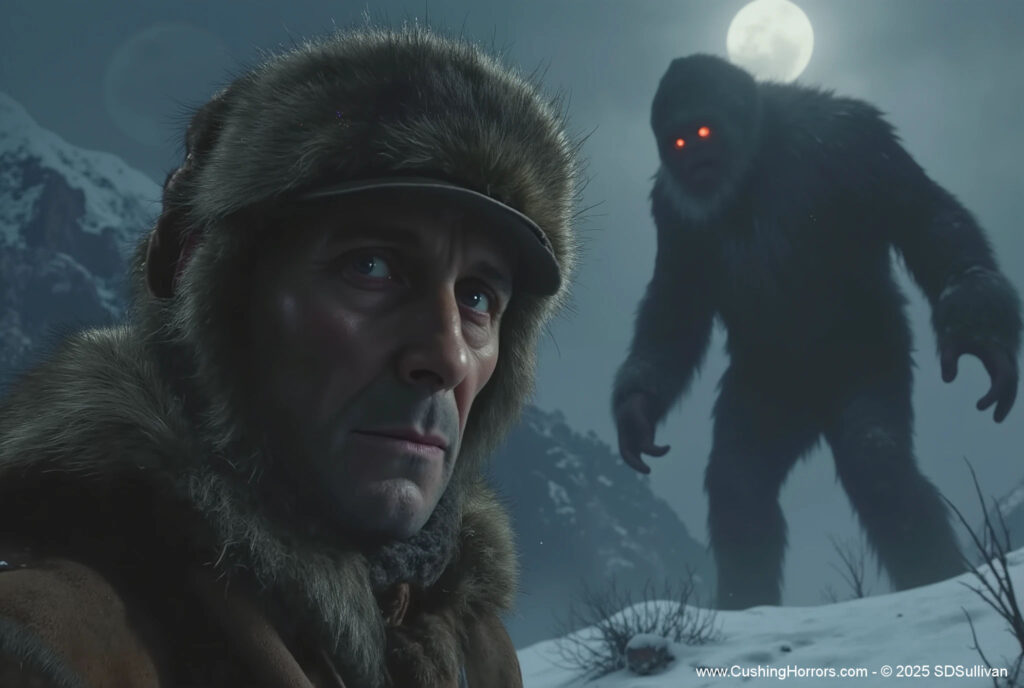
ABOUT THE STORY
I love cryptozoology, which is the study of unknown and often legendary creatures.
I don’t believe a lot of it, but I’ve been fascinated by the subject since I was a kid. In fifth grade, there was one “real monsters” book (with photos) that I checked out over and over from the school library. (I haven’t been able to re-find that book as an adult, sadly, and don’t remember the exact title. If I can find it, I’d like to own a copy.)
If you’ve followed my career, you may know that I did 42 episodes of Uncanny Radio with my late, dear friend Linda Godfrey, original reporter of the Beast of Bray Road story and keeper of all werewolf lore. On the show, I played Scully to her Mulder (as in the early X-Files shows), but despite my skepticism, I still love cryptids—weird creatures that may or may not really exist.
So, it’s probably not surprising that a “true” monster story would form the background of a Dr. Cushing tale. After all, I wrote a Bray Road-type tale for my annual Halloween Frost Harrow release a few years back, and my 2025 Frost story features another werewolf/dogman tip of the hat.
That recent story was partly inspired by the threat to the small forest near my house, which sadly has now been clearcut. This story probably started percolating in my head because of all the “true monster” dogman videos I watched while working on that Halloween tale.
Yes, for once at least, one of my holiday projects was not directly based on a conversation while lying in bed with my wife.
However, chatting with Kifflie about the fistful of story notions I was considering for this year’s Christmas “Ghost” Story helped me to clear up some problems I had with each of those ideas, and particularly this one, which I was feeling a strong desire to write. (Because I save story notes for later use, the others may show up in the future.)
The problem with “Dr. Cushing & the Mountain Devils” that had me stymied was how to get the Cushings to this hemisphere and where they might go once they arrived. Kiff was pushing for investigating Champy, the supposed sea serpent in Lake Champlain. I was leaning toward either Okanagan Lake and Ogopogo or the story you just read.
It’s not impossible that I’ll end up doing both, eventually, though I’m not sure I can do Cushing Horror tales for both Ogopogo and the Loch Ness Monster. And I’ve wanted to do a Cushing family Nessie yarn for a few years now. Time will tell.
Anyway, the legend of the battle at Ape Canyon has been lurking in my mind for ages. There’s a similar bigfoot attack story told about Portlock (a.k.a. Port Chatham), Alaska, but that’s from the 1940s. As faithful readers, you probably know that all my Dr. Cushing stories (to date) start “Between the two Great Wars.”
The account my story is based on happened in 1924. It takes place near Kelso, Washington state, in what’s now known as Ape Canyon, but back then was called Goat Gorge. The details of that siege on a remote mining cabin are basically as laid out (and echoed) in this tale.
I got my historical/mythical information from a variety of sources, including an episode of Josh Gates’ Expedition Unknown spin-off show Expedition X (S3 Ep5, “Canyon of the Apes”). In it, Gates’ team, Phil Torres and Jessica Chobot, investigate the legend and hike out to where the cabin used to be. They also attempt to find actual ape-monsters/bigfoots in the area, something all of these true-mystery shows try at some point, though none ever succeed. Just know that every expedition ends in frustration (but with tantalizing hints, possibly ginned up by the producers) if you’re planning to watch this or any of the other cryptozoological shows I mention.
Smalltown Monsters, a YouTube and subscription-based studio creating movie-length cryptid stories/investigations, did several Ape Canyon shows, including one about hiking up to the cabin site, The Journey to Ape Canyon, which provided me with an excellent source of atmosphere and location detail.
Of course, you have to remember that this story is set on the slopes of Mount St. Helens, the volcano that erupted so spectacularly back on May 18, 1980. Fortunately for all lovers of bigfoot/Sasquatch lore, the side of that mountain exploding did not obliterate Ape Canyon and its environs, though it did reshape them.
Those true-life docs are my primary video sources for the legend and setting of “Dr. Cushing & the Mountain Devils,” but there are plenty of others out there, too.
Sasquatch, The Legend of Bigfoot (1976) is one of many “true” pseudo-documentaries about the big hairy guys that were churned out in the wake of The Legend of Boggy Creek (1972). It even includes a clip of the Patterson-Gimlin film (which I consider a fake) that jump-started the bigfoot craze in 1967. (That film is also responsible for one of the best photos in that grade-school true monster book I mentioned at the top of this section. Boy, did that get my 10-year-old heart pumping!) S,TLoB also includes a crude but creepy recreation of the Ape Canyon battle’s events.
Since the Mountain Devils siege is one of the key incidents in bigfoot lore, there are plenty of recreations and secondary source accounts out there, too, many embellishing what “actually happened” with their own twists. Those enhancements have been going on since newspapers first covered the story back in 1924, over 100 years ago.
But you can read the original Ape Canyon legend as told by Fred Beck—who was there and claims to have done most of the shooting of alleged Mountain Devils—in his short book: I Fought the Apemen at Mount St. Helens, WA. It’s free online below, assuming the link still works when you read this:
http://www.bigfootencounters.com/classics/beck.htm
Mr. Beck’s story is related briefly in concise and believable language. I was impressed.
What he thinks Sasquatch really are gets weirder but isn’t too far off from the pseudo-scientific mysticism that a lot of bigfoot researchers tout nowadays. Maybe Beck got that particular ball rolling. You be the judge.
I had to do some research to discover the actual name of the second man shooting at bigfoot(s) in the legend, for whom Beck uses the pseudonym “Hank.” (I didn’t want to use fake names in my story’s background.) After some digging around—the names of all the men involved are public record—I discovered Beck’s partner was Marion Smith, which seems to fit the rest of the events. So, he gets name dropped, too, by my fictional grifters.
That’s probably more than enough about the true-life roots of the story.
YouTube was not only helpful with the monsters, but also with researching the 30-30 Winchester rifle and how it worked, as was Wikipedia. Wiki also supplied information about the trucks, Kelso, and Ape Canyon and its legend as well as a lot of other background I needed for the mid 1920s. Google provided map references for the relative locations of the volcano and the canyon. I do try to use accurate info in all my stories, even when the research slows down the writing.
If I’ve gotten anything wrong about the time or setting, at least you know I tried.
One thing my hero struggled with in this story is money conversions and math (which the British call “maths”). For those of you who don’t know, the old British money system was:
12 pennies in a shilling, 20 shillings in a pound, and a lot of other variations in between.
So, 240 pence in a pound, which seems crazy to those of us in the US, even without complicating it with crowns, farthings, etc. Folks like the Cushings were used to that madness, though, and worked with it as easily as we do with dimes, quarters, and dollars.
For what it’s worth, Cushing was, indeed, vastly overpaying for his trip out to Ape Canyon.
My research revealed that a pound sterling in the mid-1920s was worth $4.86. A month’s pay in England was around £11, while in the US it was $40-60, though somewhat higher for lumberjacks in places like Kelso, WA.
Poor Dr. Cushing budgeted £5 per week for his trip. So, his little expedition to Ape Canyon cost him dearly and likely pinched the family accounts at least until they all returned home to 1951 Fisher St. in London.
I don’t have a lot to share in the way of tributes or Easter Eggs in this story, aside from the usual tie-ins with all of the other Cushing works. Tyler is a small tip of the hat to Doug McClure’s rough-hewn hero in The Land that Time Forgot. The Reverend Dr. Lawrie Bennet (Laird) is a shout out to Lawrie Brewster, a British acquaintance who is the head of the revived Amicus studio and makes amusing films.
Will next year’s Cushing Christmas Ghost Story take place when Dr. Cushing is reunited with his family on the shores of Okanagan Lake after the end of this tale? Or will I decide to write up one of the other ideas I brainstormed this holiday season?
Or will something entirely new catch fire in my fevered imagination?
Only time (and reader demand) will tell.
Reach out and let me know what you think.
Happy Holidays, Merry Christmas, and Happy New Year, 2025-6!
—Steve Sullivan
22 December 2025
Thanks to Chris Verstraete, Jean Rabe, and Warren Langlois of the Keno Writers for critiques and suggestions and to my wife, Kifflie Scott, for proofing. You all make my work better.
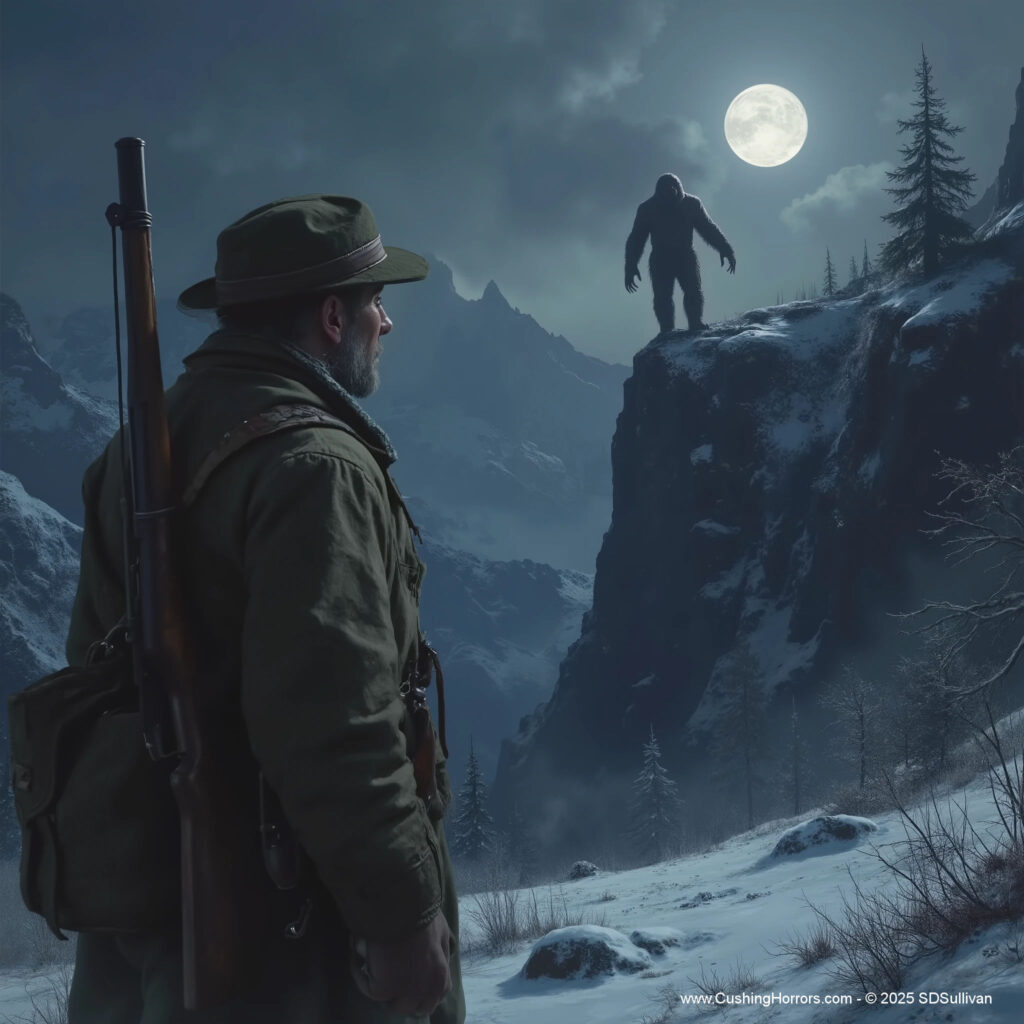
Music to Read By
Bernard Herrmann: North by Northwest, Journey to the Center of the Earth
Salter & Skinner: Universal’s Classic Scores of Mystery & Horror
Along with a little…
Max Steiner: King Kong, Son of Kong